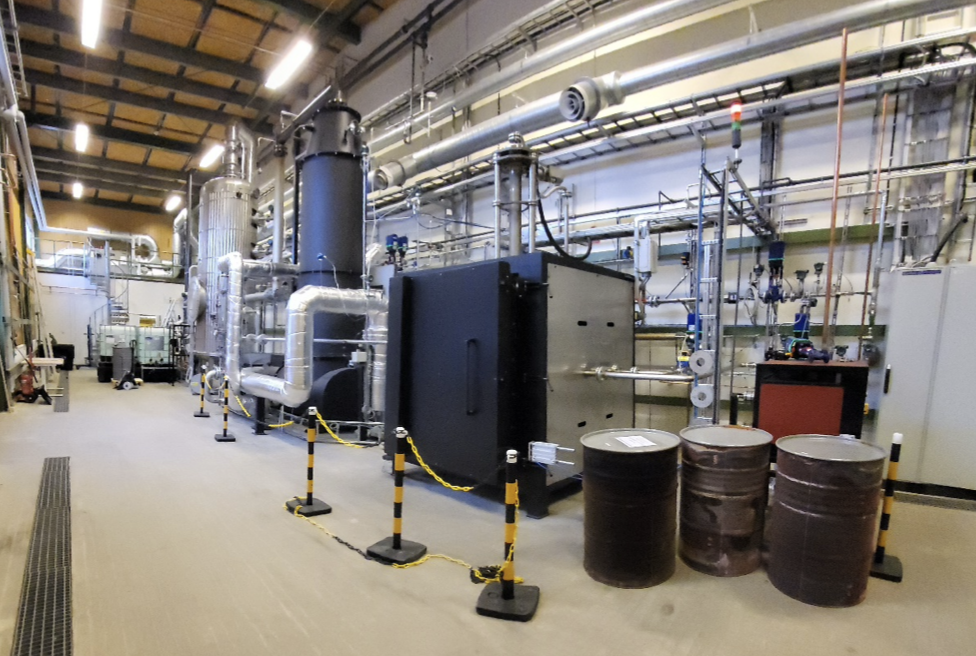
The inDRUM demonstration facility has in operation since September 2024 at the Studsvik Site in Nyköping, Sweden
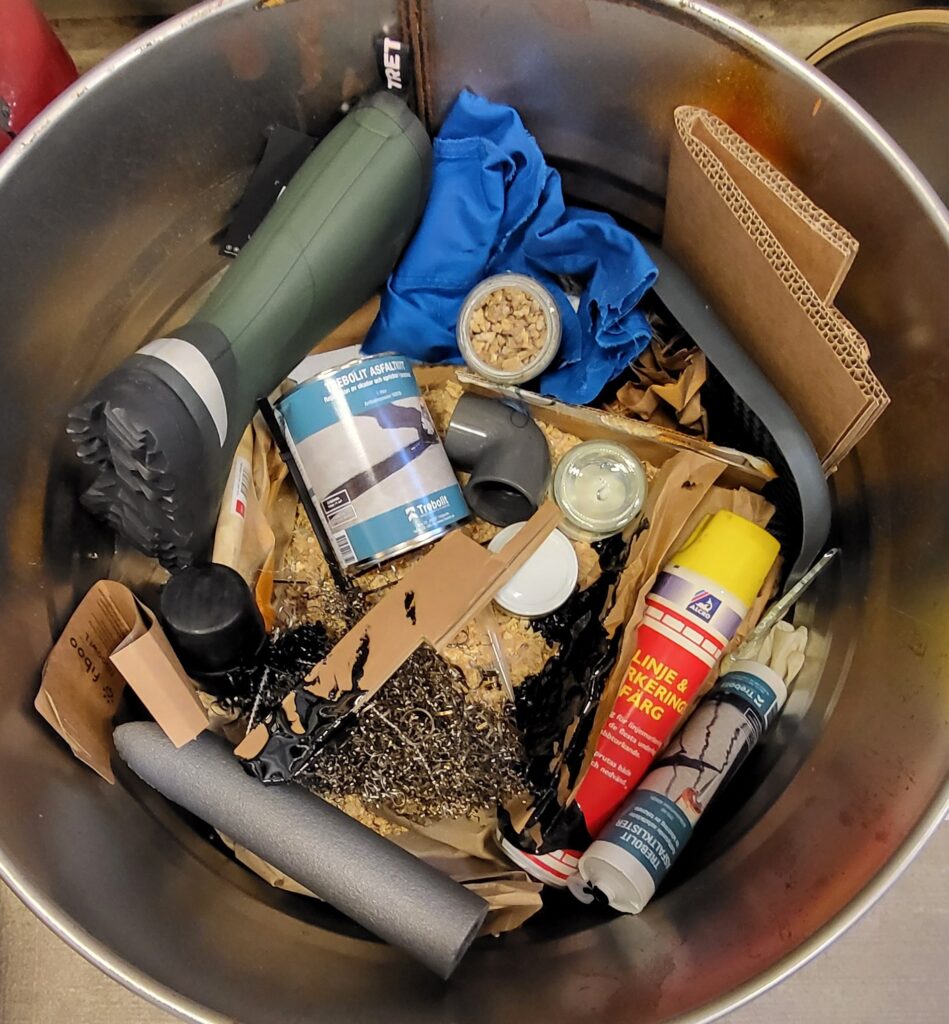
Problematic waste treated in Studsvik:
- Jar and tube with bitumen (tar)
- PVC, rubber, plastic, wood, spray cans
- Cellulose, organics, metal
- Closed glass jars with liquid
- Glass jar with nitric enriched organics (very reactive)
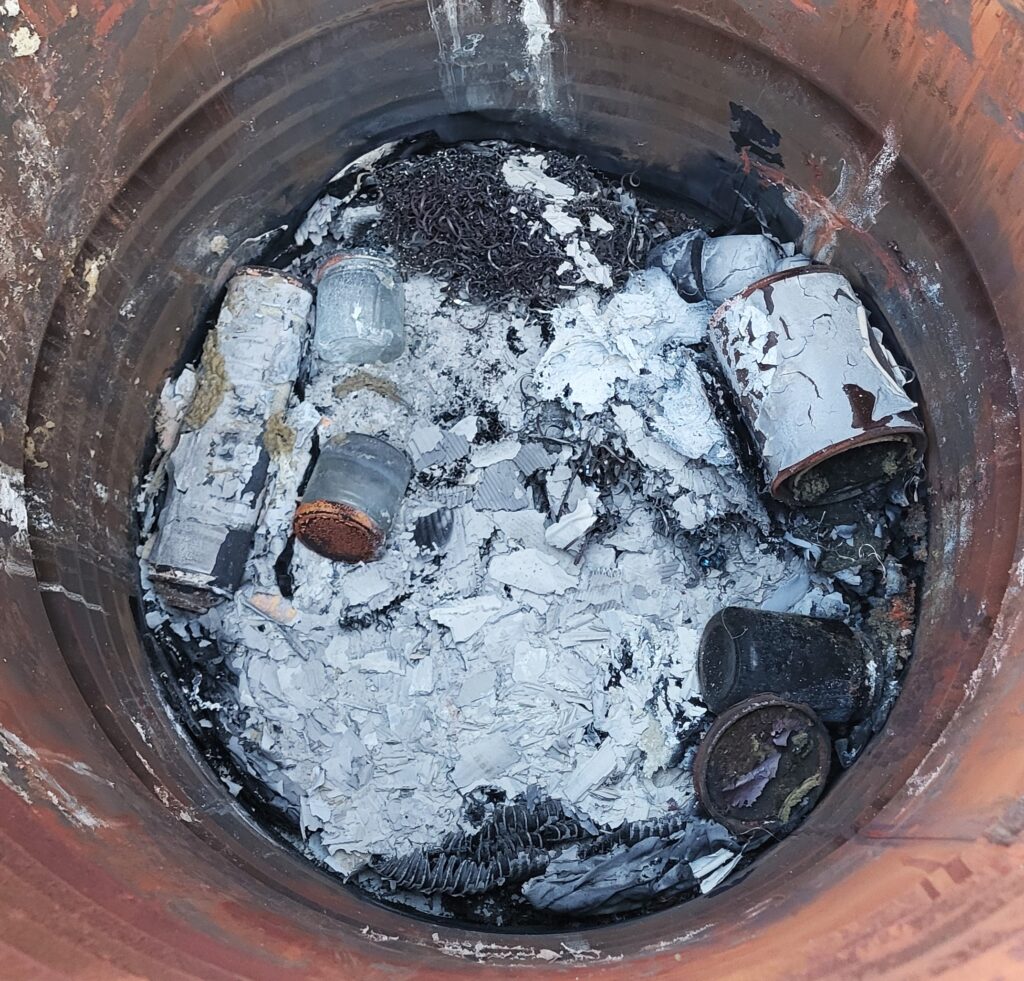
After treatment:
- A small fraction non-reactive waste containing most radionuclides remain after a typical inDRUM treatment
- All glass jars and metal cans are intact but the liquid waste inside gone
- The bitumen/tar is gone
- The reactive organics were treated successfully
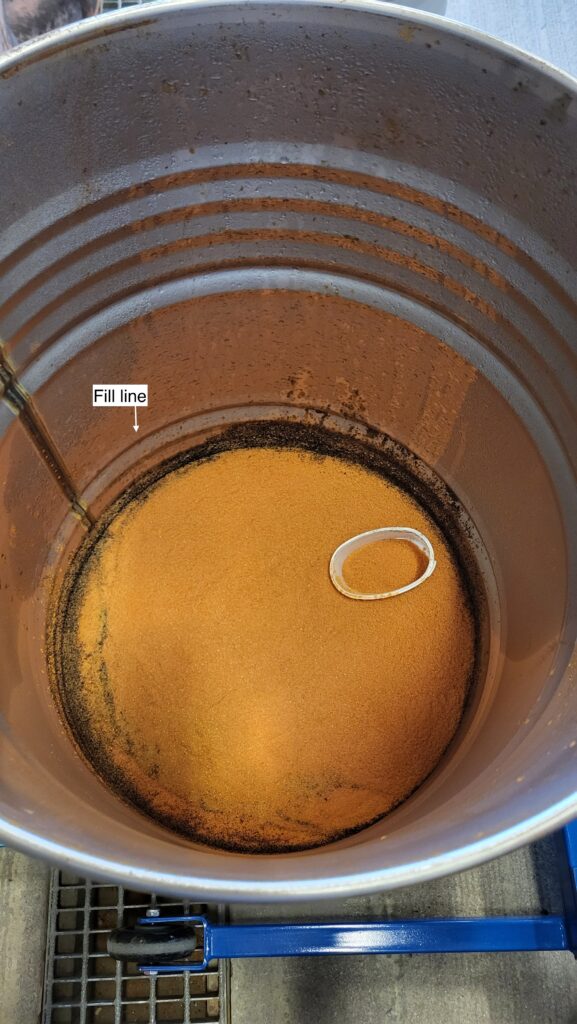
Ion Exchange Resin treated at Studsvik site
44 liters of resin (The resin was stored in room temperature for some months before treatment)
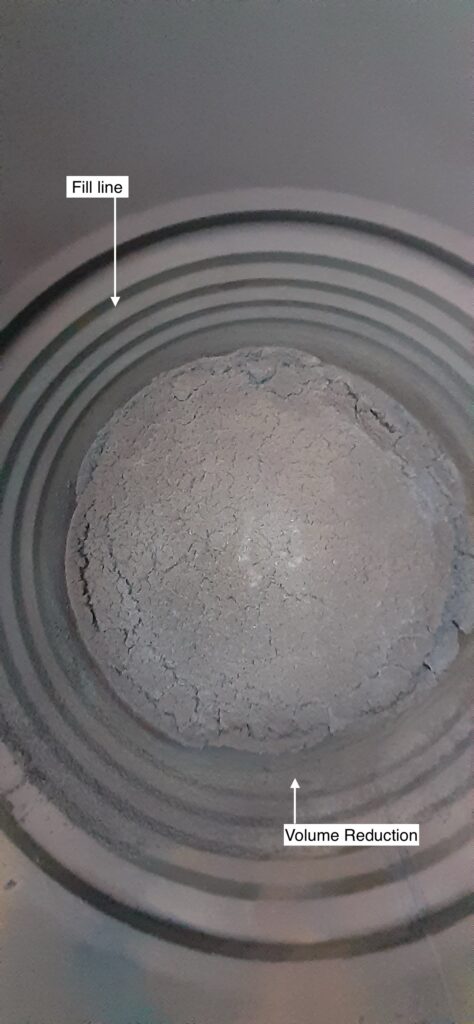
After Treatment
About 5% volume (fluffy “ashes”) remained
Four main drivers for inDRUM treatment:
- Make the waste disposable:
inDRUM remove radioactive wastes characteristics that are unacceptable for shipping, long-term storage and direct disposal - Reduce the volume:
Gives volume reduction often of 90+% - Minimal manual handling (cost):
No requirement for sorting or opening - Minimize worker risk exposure